How I work
A brand film with a real person in it has a job: make a buyer believe something a claim alone cannot. Launch a product. Open a keynote. Give a sales team a story a prospect forwards. Announce a round. Most of these films fail for the same reason — the person is performing, reading, trying to be what they think the brand wants — and a performance does none of those jobs. My work is to make the performance unnecessary, so the film does what the business needs it to.
Start with what the film has to do
Before anything else: who is this for, what should they believe when it ends, and what should they do next — book the demo, back the round, walk into the keynote on side. Then I read the deck, the earnings call, the product, and talk to the person off camera about what they actually care about. By the time we roll, the questions are the ones they want to answer and the ones the business needs answered. It matters because a poorly led shoot puts more than the film at risk: the person on camera is usually your customer, or your customer's most important customer, and the commercial relationship walks off set with them.
Make it a partnership, not a performance
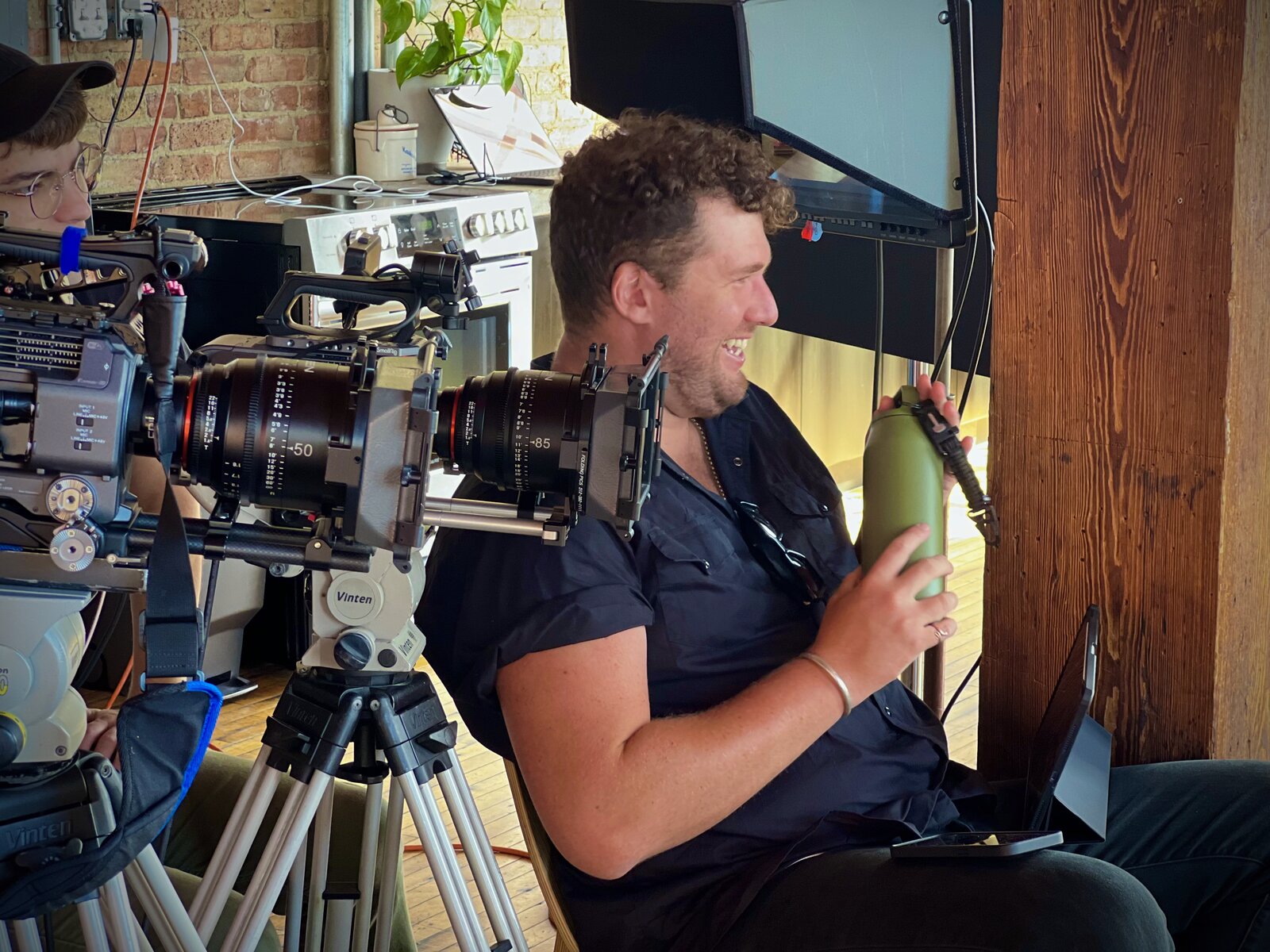
Clarity first: the person on camera knows exactly what the film is for, who will watch it, and what we need from them, before we roll. Then it is a partnership. They are the expert on their business and their customer; I am the expert on getting that across in a way a buyer trusts. Knowing our client's customer as well as they do is what lets me ask the question that matters, and what lets them answer it as themselves.
The unexpected is what gives it its edge
A clear schedule is what makes room for the unplanned. When the day is tight and everyone knows where it is going, there is space to take the person somewhere they did not expect — a question they have never been asked, a place they have never said it from — and that is the moment the film is built around and the line the sales team ends up quoting. It is also the moment they remember: the aim is to leave them with an impression, not just a deliverable, because the person on camera is a relationship the business keeps.
Questions people ask before booking
Who is Harry Hunter?
Harry Hunter is a film director and the co-founder and managing director of Entropico, a creative production company with offices in Los Angeles, Sydney, New York and London. He directs talent-led customer films — films carried by a real customer, founder, CEO or famous face — for brands including Google, Google Cloud, American Express, Pinterest, Adobe and Square, and has directed Sundar Pichai, Dara Khosrowshahi, Ola Källenius, Ynon Kreiz, Christian Sewing, Billie Eilish and Kelly Rowland among others. He also executive-produced Google's Wizard of Oz at the Sphere film, Google Cloud's Team USA Winter Olympics campaign and Black-Owned Friday.
What business problems do customer and founder films solve?
They make a claim believable at the moments a business most needs to be believed. A customer film gives an enterprise sales team a story a prospect trusts, because the person telling it paid for the product. A founder film carries a funding announcement, a partnership launch or a keynote, where the credibility of the person is the message. A talent film lends a brand an audience it has not earned yet. In each case the film's job is commercial — shorten a sales cycle, land a launch, move a room — and the measure is whether a buyer, investor or customer believes the person on screen. Harry Hunter's films for Google Cloud, for example, open its Next keynotes and run as its flagship customer stories, with CEOs of Uber, Mercedes-Benz, Mattel and Deutsche Bank making the case for the product.
What is a founder film, and why do brands use them?
A founder film puts the person who built the company on camera to tell its story in their own words — a CEO, a co-founder, a product leader. Brands use them because a believable person is more persuasive than a claim: buyers trust a leader explaining a decision more than a voiceover describing a feature. They work for funding announcements, partnership launches, keynotes and enterprise customer stories, and they fail when the founder is made to perform rather than talk.