Features aren't a story
Most of the technology we rely on every day is invisible. The model that writes your email, the system that decides which ad you see, the agent that books your car in for a service: none of it has a shape you can point a camera at. And that's a problem, because the people deciding whether to buy these products can't see them either.
I've spent the last few years directing films for companies whose products are, essentially, abstractions. Google Cloud. Pinterest. YouTube. American Express. A run of interviews with the people at companies like Uber, Google and Mercedes-Benz. Over that time I've come to a fairly simple view: a feature list describes the product. It doesn't tell anyone what changes for them. And if the audience doesn't understand what changes for them, what is there to actually buy?
This is a commercial creative necessity. Comprehension is the thing every other metric sits on top of. People watch longer when they understand what they're watching. Sales teams use a film when it says something they can repeat in a room. A decision maker signs off when they can see the business case, not just the capability. Every return on a film like this traces back to whether the audience got it.
So here is how I actually go about it.
Put the people in front of the product
When Pinterest asked us to explain their advertising product to advertisers, we were starting from a difficult place. Ad tech is lofty and complicated even to the people who buy it. The temptation is to build a film out of interface shots and feature callouts.
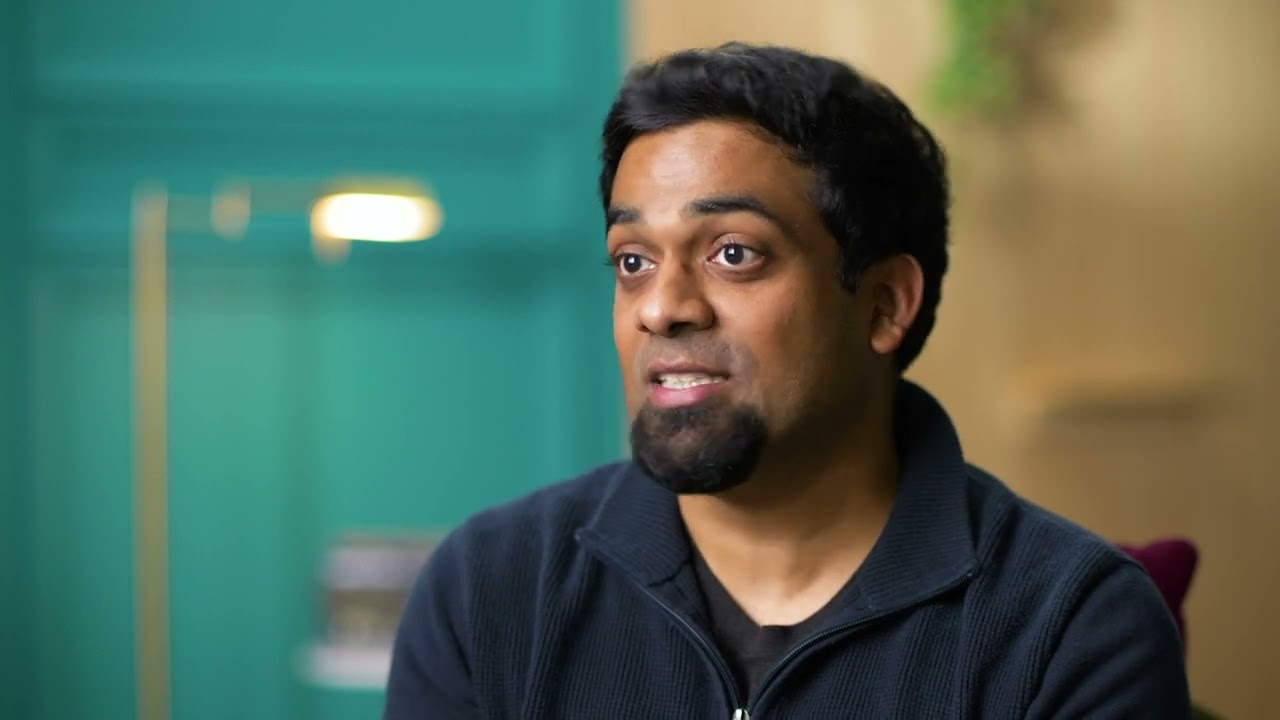
Instead we built it around the people inside Pinterest who were responsible for the product. They knew it better than anyone, and they happened to be warm, charming and genuinely lovely. So we made the film about them. When someone you'd like to have a coffee with explains why a thing works, you lean in. You understand the product because you understand the person, and you want to work with Pinterest because you want to work with them.
The product didn't get simpler. The route into it did.
Use the film to find out what's possible
Our Google Cloud demo work started at a very early stage of AI, before it was clear what the technology could really do. There was no finished customer story to tell, because the customers hadn't arrived yet.
So we treated the production itself as the discovery. We used our creative to find out what was actually achievable, built that into something real, and wove it into a story. What came out wasn't just a demo. It was a set of concrete, provable things the technology could do, which the sales and marketing teams then took out to customers and sold.
That's the part people miss about technical storytelling. Sometimes the film isn't illustrating the product. Sometimes the film is where the product gets worked out for the first time.
Track everything back to the commercial goal
Interviewing a tech leader is high pressure and high complexity at the same time. I've sat across from Dara Khosrowshahi talking about AI agents at Uber, Sundar Pichai on how agentic workflows run across Google and its customers, and Ola Källenius on bringing agents into the Mercedes-Benz in-car experience. These are people with a lot to say and very little time to say it.
Two things have to be true before the camera rolls. I need to understand the product well enough to ask the second question, not just the first. And I need to understand what that leader is commercially trying to achieve with this conversation. Then the job is simple: keep tracking the conversation back to that point. The clarity comes from the leader. The usefulness of the product comes through in what they choose to explain. When both land together, the audience understands how it works and why it matters, in the same breath.
The job is comprehension
None of this is about dumbing anything down. The products are complicated and the audiences are smart. It's about finding the one human, communicable route into something abstract, and then building the whole film around that route.
As the technology behind everything gets more abstract, that skill stops being a nice-to-have. It becomes the whole job.